TW: poor mental health, domestic abuse, suicidality – Guest Blog written by Serin Gioan from Beloved Beasties, A Birmingham based Pet Care Service
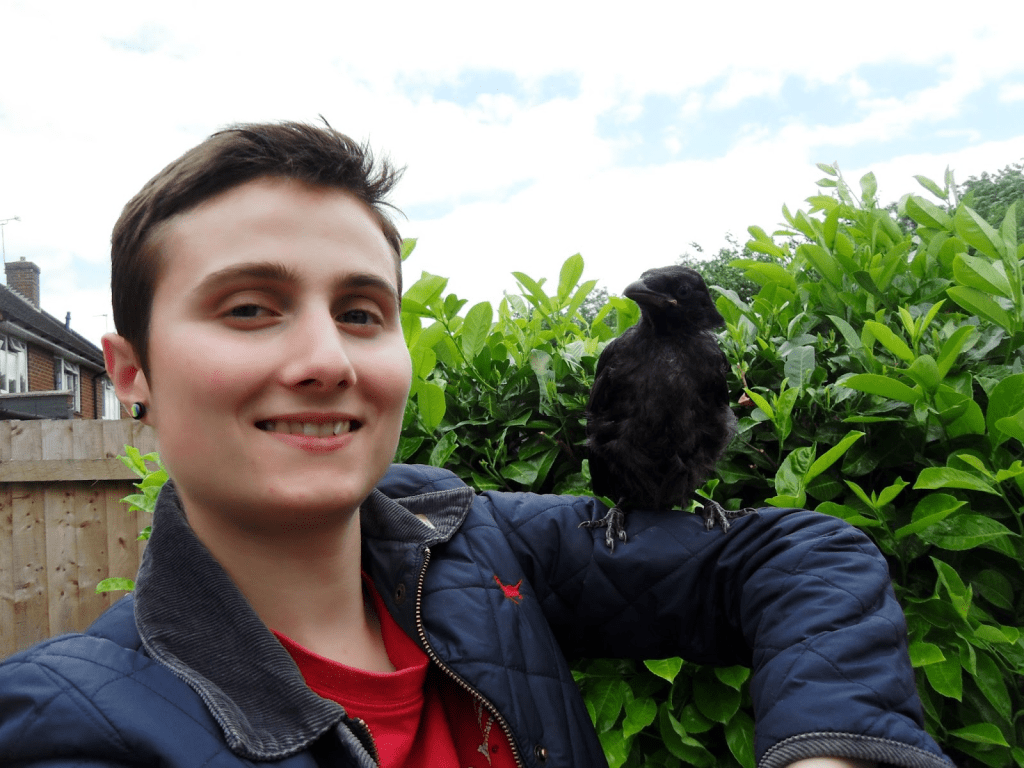
When I was younger, I didn’t know I was neurodivergent, and I was very frustrated at myself for not being able to fulfil the expectations people around me kept insisting should be easy.
I forced myself to try to socialise like other people and to perform to neurotypical standards without regard for the cost to my energy and mental health.
However, one thing I was never afraid of was being a nerd, and I have always been a massive nerd for animals! I read hundreds of encyclopaedia’s and other books on animals, convinced my parents to let me try horse riding when I was about 5, and finally won the battle with my parents to get a dog when I was 16, after many years of owning hamsters, rats, mice and guinea pigs.
You could even say I started my dog walking business early, since I started walking our neighbours’ dogs with my mum when I was about 10, and did so for many happy years, though spending time with dogs was payment enough at that age!
I don’t know exactly why I adore animals as much as I do;
My mum says I was reaching out to dogs from my pram, demanding we watch only the animal Disney films, and devouring books about critters from the moment I could read, so I guess it really was in me from birth. Still, I do think that a lot of neurodivergent people tend to get on particularly well with animals for a variety of reasons.
We live in a society which is structured and designed for neurotypical brains, and which is often unforgiving of what is perceived as “social deviance”, or a different approach to socialisation or ordering our lives. We’re often met with the harsh judgements of other people, and an assumption that we will adjust our way of being for their comfort.
As a result, interacting with animals, who harbour no such prejudices, and who appreciate sensitive, non-verbal and authentic interactions, can feel like a breath of fresh air, and animals are often much better than people at sensing our discomfort, giving us space and time, and meeting us where we are.
In my youth, my social skills were very poor; I had no real friends at school until I was 13, often retreated into books to escape bullying from my peers, and was frequently called “weird” by children and adults alike for my non-standard way of connecting with people. It’s no wonder I found great comfort as a kid from spending time with non-judgemental, patient creatures who loved me for who I was without expecting me to change.
As I mentioned, I was also a big nerd, reading everything I could get my hands on about the animal kingdom, watching countless documentaries and films, and conducting research in my free time to sate my thirst for knowledge about our fellow beasts. Animals were one of my main special interests, something I could be unashamedly passionate about and proud of, and which society didn’t deem inappropriate for someone raised as a girl, unlike some of my other interests.
It was also useful in getting me out of my shell, as it had a real-world component as well as the bookish theory side of it. It meant I didn’t stay locked away in my room all day reading to stay away from the stresses of the world, instead heading out to walk dogs, muck out horses, and buy treats for my rats, giving me precious time in nature to calm my frazzled nervous system, as well as teaching me how to interact with people in an environment I was comfortable with by bonding over a shared passion.

My activities around animals started out as a hobby/pastime;
In the sense that I was engaging in them for my own enjoyment, or on a voluntary basis, but it wasn’t long before I started getting part-time work from it since people noticed that I was naturally good with animals and supplemented this with further learning to improve my skills.
I began working at the stables in exchange for riding lessons, and often rode the difficult ponies to help teach them that not all humans are unbearable. Friends and family also started asking me to dogsit and pet sit for them, and occasionally walk their dogs for them when they couldn’t. I continued to do this part-time throughout my adolescence, studies and early office work, and found it was a source of joy and satisfaction to me in an uncomplicated way that other occupations often weren’t.
Not to say it isn’t hard work – people imagine that it’s all playing with puppies and cuddling kittens for a living, but I can guarantee you that it isn’t, and some days I come home late, stinking, exhausted, and my trousers covered in suspicious brown stains, and then I still have to log my hours, send invoices, respond to client messages and keep my social media active. But although it’s hard graft, it’s gratifying, wholesome, and I can directly see the happiness it brings my furry clients, a far cry from some of the soulless, corporate and uncaring office environments I’ve encountered in the past.
It was about a year and a half ago that I decided to leave the job that was making me stressed and exhausted, and to start my own business in pet care full-time.
I had spent several years in roles that I found stressful, often unfulfilling, and with managers who were overworked themselves and so had to ask the same of their teams. I had traversed a period of particularly poor mental health, working in a team that had little chance to feel like one, with to-do lists to make you weep, and frequent resignations from colleagues who couldn’t cope.
I had broken up with a partner who had taken advantage of my trusting naivety, and was struggling to rebuild myself and process what had happened (studies have shown neurodivergent people are at higher risk of being abused by those around them for various reasons). I was engaging in private therapy which was helping me come to terms with past trauma and the impact it was still having on me in the present. I realised that the thing that made me happiest in my life was my beloved dogs.
Sometimes the only moments I didn’t feel grey and hopeless was when I was out walking in Cannon Hill Park with my precious puppies, finally breathing fully and watching their pure joy as they galloped around. It’s no exaggeration to say that those sweet beans kept me alive through a dark time, and giving care and attention to other people’s dear pets helped rebuild my fragile sense of self and find a reason to make changes for the better.
So I left the job in which I’d been trying so hard to perform as society dictated, and Iaunched my own full-time pet care business, and I can honestly say I’ve never looked back!
The first few months were a bit stressful; setting up a business involves a lot of admin which my ADHD didn’t love, and it was tough taking the initial financial hit as I built up my client base. However, the immediate and massive uptick in my health (mental and physical) and energy levels left me in no doubt that I was doing the right thing for myself and my furry family. Instead of dragging myself out of bed in the morning, pushing through high levels of anxiety and burning all my spoons on work till I had no resources to even make a meal or shower in the evening, I found I was actually looking forward to my days – heck, I was even enjoying myself all day at work rather than chasing fleeting moments of satisfaction in an ocean of crushing pressure.
I’ve built strong relationships with my human clients, some of whom I’m now good friends with, and I adore seeing how much they spoil and look after their furry children. It makes me so proud and honoured that they trust me to care for their beloved babies, and consider my advice and suggestions to improve their pets’ lives. I recently lost one of my dogs, and my life will never be the same. I thought I’d have to take a chunk of time off work, but miraculously, the next day, looking after a pup who couldn’t be left alone all day, I realised that I felt, if not good, at least better, seeing her happily galloping about, loving life and gleeful to be sharing it with me.
I feel extremely privileged and fortunate to have been able to become a pet care professional like this.
I couldn’t have done it without help. My excellent therapist has helped me work through what is good for me and what isn’t (and to figure out how I want to live my life as a queer neurodivergent person, not as someone trying to be palatable and neurotypical). The two wonderful neurodivergent people I live with, my nesting partner and our housemate, have helped me feel so much more comfortable in myself and unmask in ways I never thought I’d be able to, as well as supporting me financially during the first few lean months.
A fellow neurodivergent dog business owner who had been in the industry for years kindly provided support and advice which made it so much easier than starting from scratch. And of course, my precious puppies were there, already believing me to be a far better person than I thought I was, trusting me implicitly to ace it, and as such making it possible for me to have the confidence to do so!
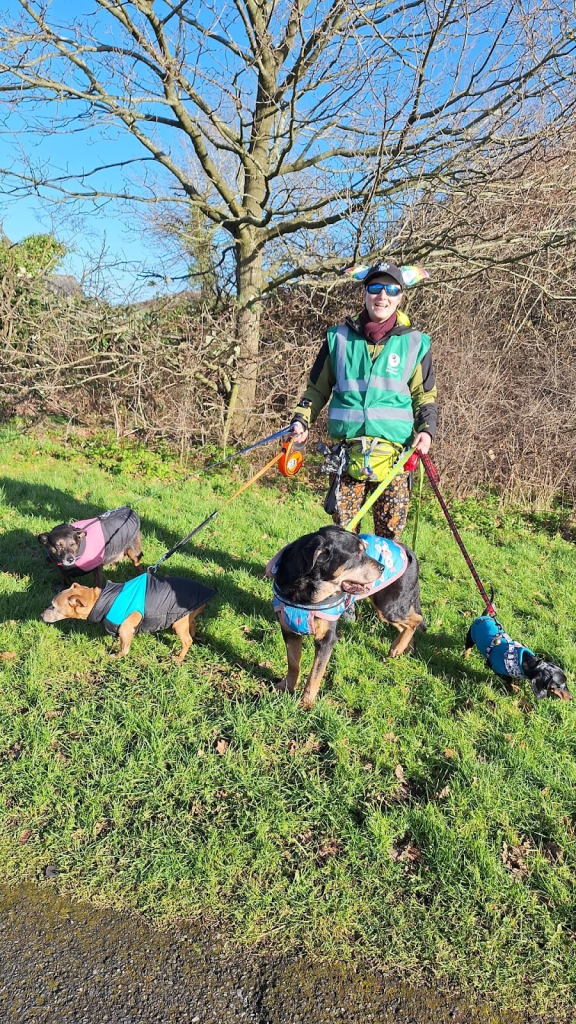
As neurodivergent people, society constantly tells us that we’re failing somehow by not being “normal”, not leading lives that follow a conventional pattern, and being “a burden” by requiring others to make accommodations for us rather than making sacrifices so they don’t have to think about it. But that’s nonsense. Everyone benefits from accommodations, not just neurodivergent people.
When we break down toxic and unrealistic norms which require people to damage their health and wellbeing for the benefit of companies that don’t appreciate them, or to present gender in an “acceptable” way, or to follow a set script for their life trajectory, everybody wins.
Everybody should have the freedom to choose what makes them happy and helps them thrive (as long as it’s not harmful to others), rather than it being an uphill battle with no support and uncertain outcomes.
I suspect there is a larger than average percentage of the animal care professionals who are neurodivergent compared to a lot of other professions, partly due to affinity to animals, partly because self-employment offers the opportunity to care for ourselves in ways managers often don’t, and partly because, as my partner succinctly put it, “autists tend to have less of a tolerance for corporate bullshit!”.
Thank you to all the wonderful pet care professionals who form the community around me. Thank you for caring, for daring to do what makes you happy rather than what’s expected of you, and for bringing joy and love to animals’ lives every day.
I hope more of us have the strength, confidence and support to break away from the “normal” (which, honestly, nobody is anyway!) and live more openly, freely, unabashedly divergent lives. Because we deserve it, and so do the amazing creatures we work with 🙂
Bio: Serin (pronouns he/they) is a 28-year-old AuDHD animal-lover who left their previous job to work full-time in pet care a year ago, and they’ve never been happier! When he’s not out rambling with doglets or cuddling up to them on the sofa, he enjoys reading, knitting, climbing, and of course doing research to learn even more about those dogs he loves so much!
Thank you so much to Serin for writing this guest blog. If you have a story to share, or have some useful hints or tips for fellow neurodivergent pet professionals and would like to feature as a guest blogger, join the free Facebook group and get in touch!



 Dogs And Divergent Minds
Leave a comment