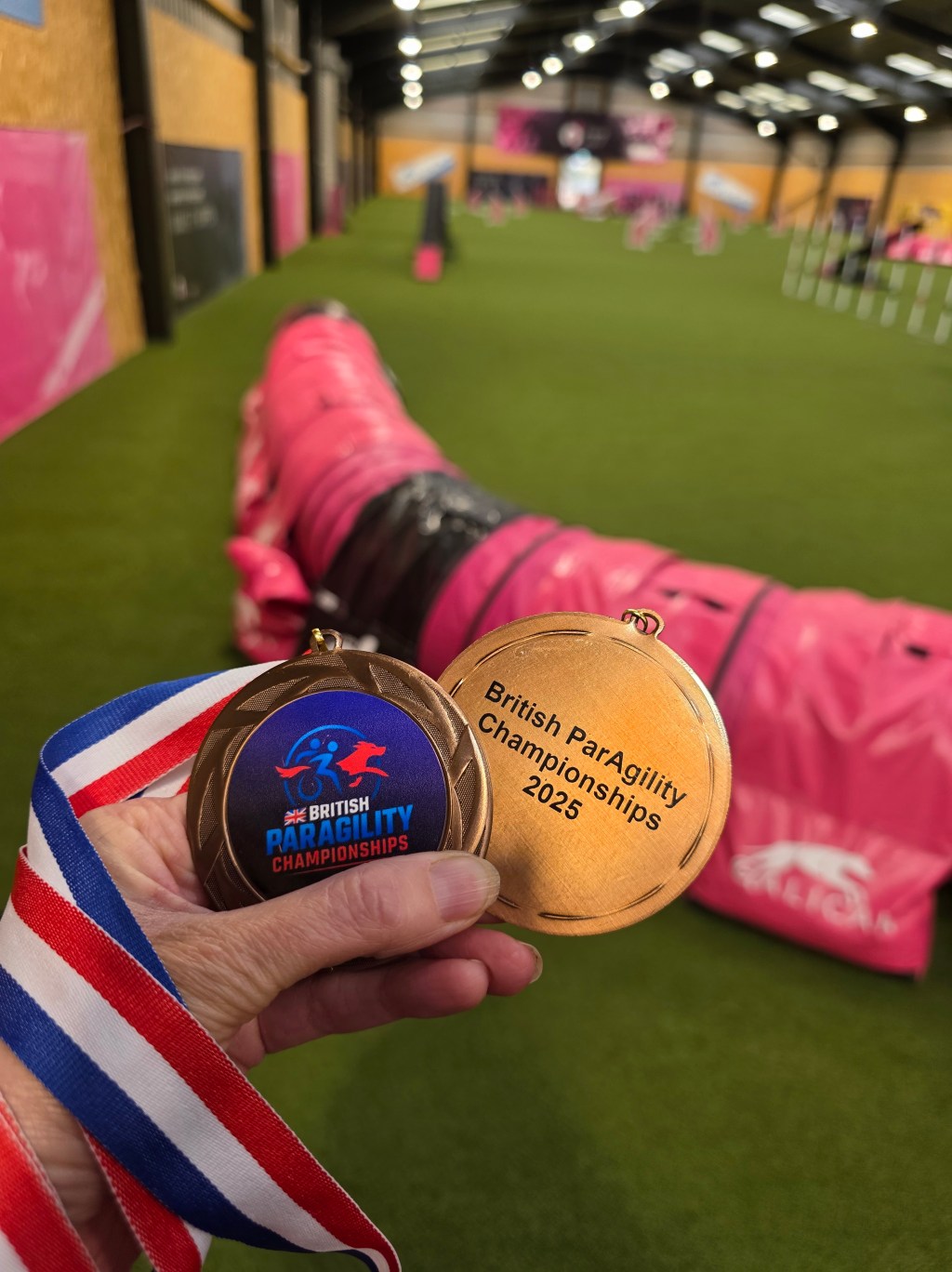
I’ll be honest — before last weekend, I didn’t really know much about para-agility opportunities in the UK. I knew the UK had a para-agility team that competed abroad, but I’d never looked into it. It’s not something I was familiar with.
As a late diagnosed neurodivergent handler with both autism and ADHD, I’m just realising how these aspects affect my experience in agility.
Looking back, I can see now that many of the challenges I’ve faced in the agility world over the years might have been easier to navigate if the community had been more inclusive. In fact it is the main reason I set up The Neurodivergent Dog Coach – to bridge the gap between neurodiversity and the dog world, and to raise more awareness so less people feel like I have over the years.
When I heard about the first British ParAgility Championships, I was genuinely excited. I was curious, a little nervous, and admittedly skeptical — would this event feel like it was for me, or more for handlers with physical disabilities?
Still, I thought, let’s give it a go and see what it’s all about. I will admit a big part of me was worried if I was disabled enough. It is a hard one to navigate, especially when I have been competing years and look ‘fine’.
Let’s dive in to what the event is about, and how I found it competing as a neurodivergent handler with an anxious agility dog.
Eligibility and Registration: What Neurodivergent Handlers Need to Know
Finding the Event
I first discovered the event on Facebook, scrolling through my feed like usual, and something about it immediately caught my attention. I remember thinking, wow, a whole event just for disabled handlers — I want to see what this is like.
Because it was a new event, I had nothing to compare it to other than regular shows, so I was really excited to see how this show differed to what I was used to.
Registration Process
Registration was through Nova Entries, which was new to me.
Honestly, I spent a bit of time staring at my screen wondering if I’d done it right — the overthinking that often comes with being neurodivergent is a pain, and because the site isn’t familiar to me, it did take a little while to navigate and to find where everything was and how it worked.
But a little comment on the British ParAgility Facebook Page and the organisers provided written guidance and FAQs really quickly, so I eventually got through it without too much stress.
Eligibility Criteria
This part did make me a little anxious. You need medical proof of your diagnosis, and you have to explain how your disability impacts your agility performance. I do have a formal diagnosis for both Autism and ADHD, so for me getting the proof wasn’t an issue, but it did make me feel a little uneasy.
I had thoughts like: Am I disabled enough to be here? Will they think I’m faking it? It wasn’t anything the organisers were doing wrong and I totally understand why they have to do this — it was all internal thoughts.
For handlers who are self-diagnosed or on a waiting list, this can feel excluding. But I also understand why a formal diagnosis is required — otherwise, anyone could enter, and it wouldn’t be a fair level playing field. It’s a tricky balance, but once I submitted everything, I felt a sense of relief.
Arrival and First Impressions
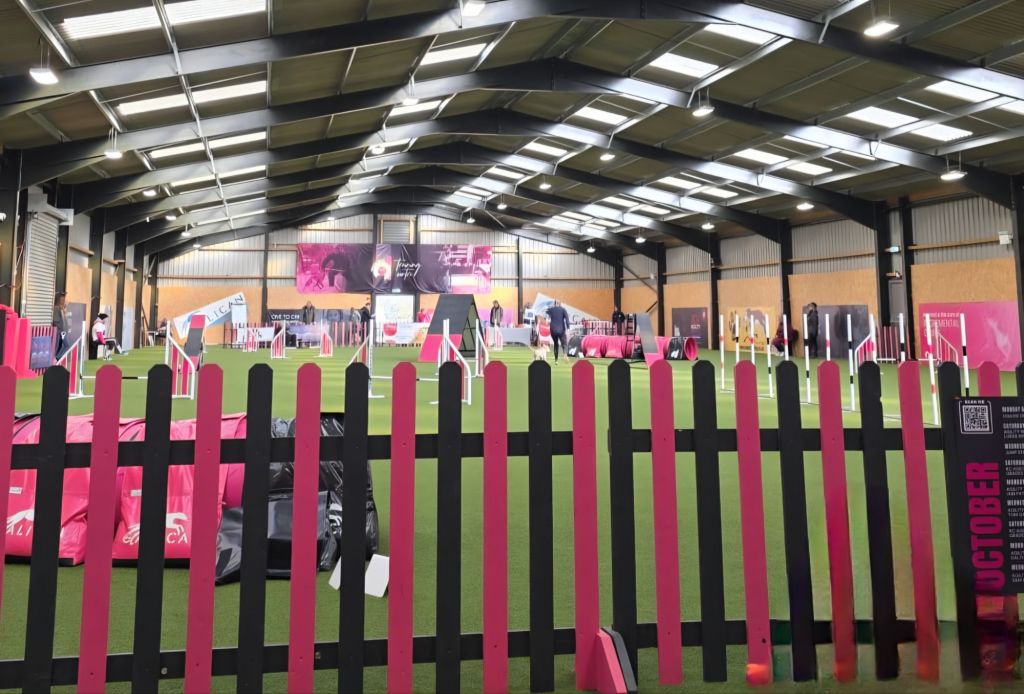
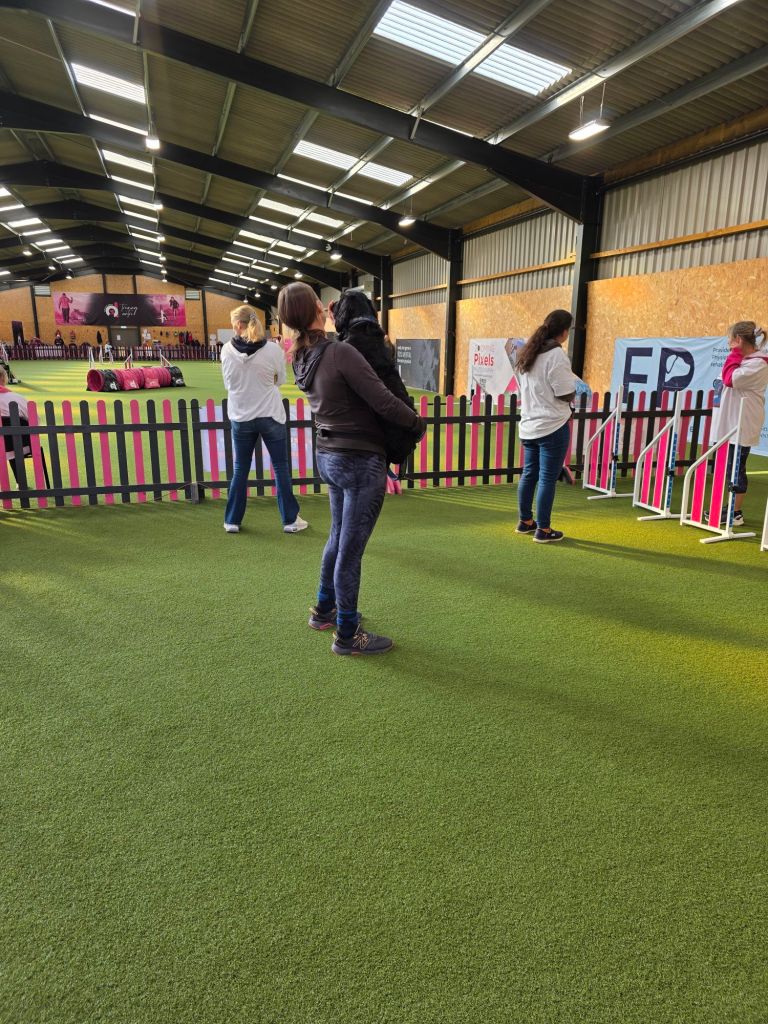
The event was held at Ogilvie Dogs, I have never been to this venue before but I immediately noticed how spacious and accessible everything was:
Parking: Attendants were really friendly and made sure there was plenty of space between cars. I remember thinking, finally, I don’t have to feel cramped before I even step foot in the hall. It did make such a difference to how I felt all day, as I had enough space around the van for both my needs and Quest’s.
Venue: Indoor AstroTurf made it a comfortable, predictable surface for both me and Quest. The facilities are amazing, and the fact that dogs weren’t allowed in the spectating areas made it a really calm, comfortable, and enjoyable experience.
Briefing and Course Walks: At 8.20am each morning there was a briefing with detailed instructions on how the day would run. There was also written guidance and running orders at both ends of the arena, so this made it really easy to navigate the day.
Small groups for walking the course were perfect for reducing sensory overload and anxiety. I had time to plan my runs without feeling rushed. The allocated 10 minute time slot was plenty of time for me to work out what I was doing, and because the groups were small, there was no stress at all which is unusual for me.
Internal Feelings: Despite all this, I did have that flicker of doubt in the briefing — do I belong here? But as the day progressed and experiencing the welcoming environment quickly eased my nerves.
Supportive Community and Inclusive Practices
This is honestly what made the biggest impact on me:
Friendly Competitors: Everyone genuinely cheered for each other. If a dog knocked a pole or made a little error, you could feel the shared empathy in the room. It wasn’t about failure — it was about partnership and enjoyment. Everyone clapped every single run despite the result.
I can honestly say that I have never been to an agility event like it! It was a lovely environment, magical even!
Ring Party Accommodations: The ring party couldn’t have been more kind, helpful, and patient if they tried!
I asked if I could throw my lead back to the ring party rather than them coming up to me at the start line. The lady remembered this on every run without me having to say each time, she was so accommodating, never once made me feel awkward or rushed, which instantly relaxed me.
Feeling rushed at the start is something I experience regularly at shows, and it sets off my anxiety, so to experience such a different start really made a difference.
Clear Scheduling: Running orders were clear, and everyone knew exactly when their turn was. Predictability is huge for neurodivergent handlers.
Even when some competitors withdrew, a fresh running order sheet was printed out and pinned up at both ends of the arena so everyone knew who was running in front of them.
Visual Cues: They had a green light start to start competitors as well as the usual auditory ‘When you are ready’, so this was great for hearing impaired handlers.
My only tiny reflection was that it was placed on the desk where the ring party where seated, so I felt the pressure of eye contact from the scribes which as a neurodivergent can be a little awkward, so for me I didn’t use the light, but I didn’t need to as the usual starting of the scribe was fine for me.
Inclusive Culture: Everyone clapped, celebrated, and encouraged each other. No competitiveness in the negative sense — just genuine joy, support, and connection which was so refreshing to be amongst. It is the calmest I have ever felt at a show.

Course Design and Judges
The judges for the weekend were Ryan Hennessy on Saturday and Dawn Warnock on Sunday.
Quest is a Grade 3 dog, and the courses were set at Grades 4–7, so I knew before we even arrived that they’d likely be above the level we usually train and compete at. I didn’t have any expectations in terms of results, I just wanted to experience the event and enjoy the opportunity to take part in something new.
In reality, the courses were fantastic. I genuinely enjoyed running every single one of them.
Saturday – Ryan Hennessy
Here are Ryan’s courses from Saturday (pictured below).
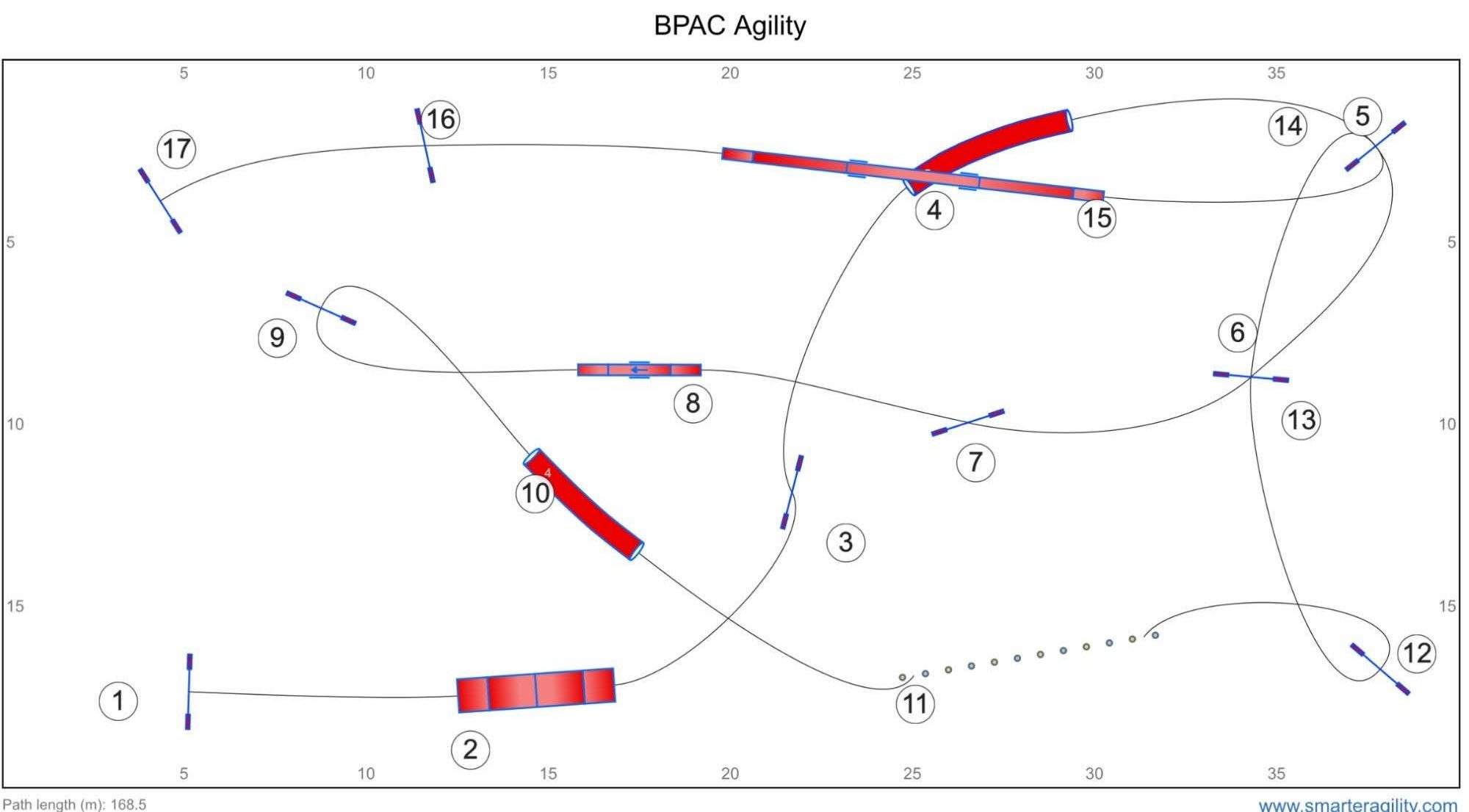


Even though we ended up with an E on each one, I honestly didn’t mind. The lines were beautiful, the flow was great, and there were some really nice technical challenges that tested our teamwork in the best way.
They highlighted some little skills that Quest and I need to tighten up and train, but rather than feeling frustrated, I came away motivated to go home and work on them.
Sunday – Dawn Warnock
Sunday’s courses, designed by Dawn, were equally fantastic:

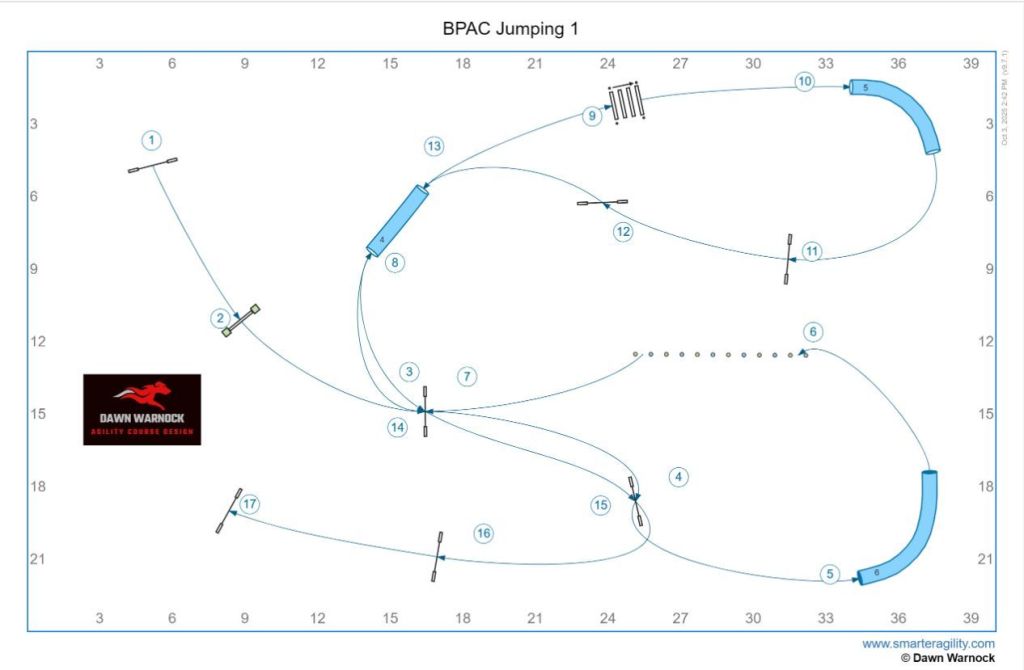

There were a few tricky sections, but overall they were such fun, flowing courses to run. The dogs looked like they were having the best time out there, and it was a joy to watch everyone run them.
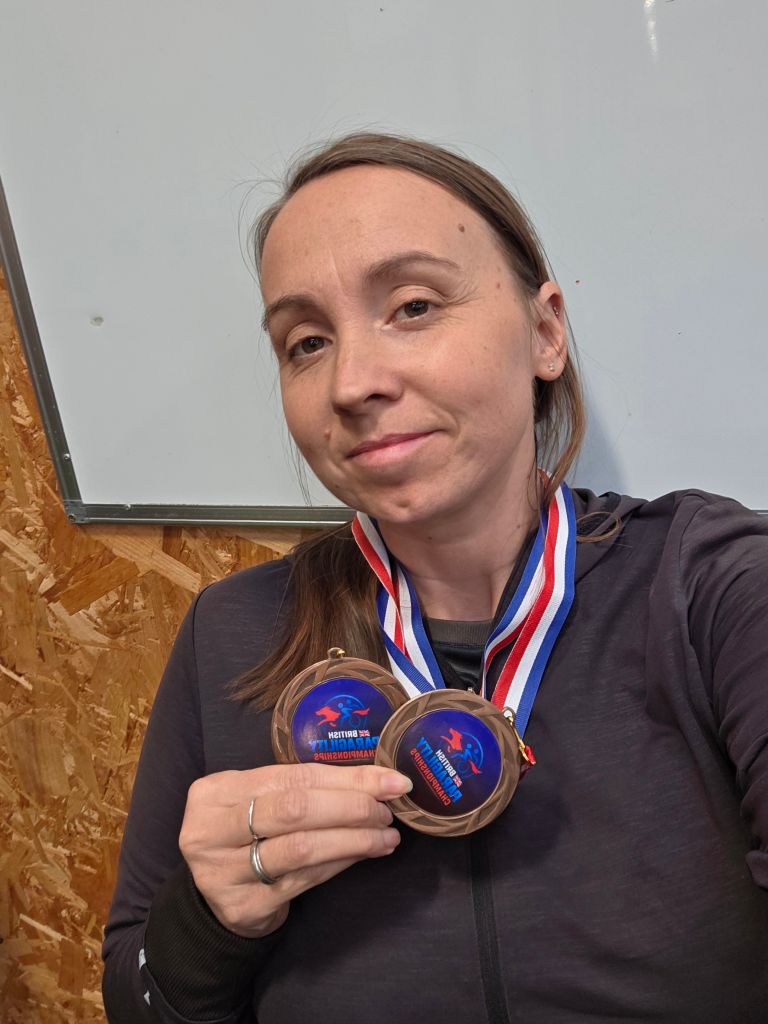
Quest even managed to come away with two bronze medals on Sunday — one in the agility and one in the second jumping run. I wasn’t expecting any results at all, so that made the day even more special.

Awards and Grouping System
One of the things I found really interesting about this event was how the awards were structured. As I mentioned at the start, I have no previous knowledge of how these events are typically run, so it was really interesting to learn new ways of doing things.
Handlers were grouped by their disability category rather than by the dog’s height or grade. So, as a neurodivergent handler, I was in Group F. That meant I was competing against handlers with different height dogs and of different grades.
For me, the results didn’t really matter. I just wanted to be part of this new and exciting event. But it was lovely to see how many opportunities there were for recognition.
There were bronze, silver, and gold placements for each group in every run, plus overall awards for the best performances of each day (Saturday and Sunday), and even an award for the overall competition winners.
It felt encouraging, and celebratory — everyone had something to aim for, regardless of level or ability.
What Worked Well: Positive Observations
Venue & Parking: Spacious, accessible, and stress-free.
Briefings & Printed Info: Clear, thorough, and easy to follow.
Course Walking in Groups: Perfect for reducing stress and sensory overload.
Queuing: Plenty of room for each dog and relaxed holding area. Only 3 dogs waiting at a time.
Helpers & Support: Approachable, friendly, supportive, and accommodating volunteers.
Visual & Procedural Supports: Green light cue, clear running orders, and patient ring parties.
Agility Culture: Encouraging, inclusive, and community-focused — a model for all agility events.
Challenges and Areas for Improvement (or in my opinion, a few things I found a little tricky)
I don’t really want to put any negatives, but it wouldn’t be a true reflection if I wasn’t completely honest about everything I felt over the weekend.
Even with such a positive experience, there were a few things I personally found a little challenging:
Queueing Congestion: On day one, the initial queue area was a little crowded, though by day two it had been adjusted, competitors were told not to be in that area, so it was all sorted without me needing to say anything.
Green Light Placement: The visual cue was a fantastic idea, but I didn’t actually notice it because my attention was on the scribes and the people at the desk. As I find eye contact difficult, I quickly looked at them then looked away, but as mentioned, I didn’t need it as I could hear the scribes instructions clearly. For handlers like me, the pressure of social eye contact can make it tricky to use a visual cue effectively, so possibly placing it in a different location would be great as it will eliminate that social pressure.
End-of-Run Dog Flow: When the dog had finished the run, they ran out of the arena towards the queue. Even though there was only three dogs queuing at any time it could create stress if a handler needed a moment to get to their dog. Possibly a small barrier with a ring party member managing the barrier could help, though I realise this would require extra support from volunteers as navigating this with mobility aids could be difficult.
Registration Requirements: The detailed eligibility requirements can feel daunting, especially for neurodivergent handlers and it definatly triggered my Rejection Sensitivity Dysphoria, but as mentioned earlier, it was all internal, the organisers never made me feel this way. Self-diagnosed individuals, or those awaiting a formal diagnosis, may feel excluded. At the same time, I understand the need for a formal diagnosis to ensure fairness — it’s a tricky balance.
Lessons Learned and Advice for Neurodivergent Handlers
If you’re thinking about attending a para-agility event:
Attend for Community and Enjoyment: Focus on connection, support, and fun, not just results.
Have Medical Proof: Be prepared in case it’s requested.
Prepare Like Any Other Event: Think about what you and your dog need, but know the environment is so accommodating, welcoming, and supportive.
Inclusive Environments Reduce Anxiety: Both you and your dog will feel more confident at this event as there are many accommodations made for us to succeed.
Celebrate Achievements: Medals are nice, but the real win is your partnership with your dog.
Mindset Matters: Enter with openness, curiosity, and the expectation of being supported.
Final Thoughts
Quest, my little superstar, brought home two bronze medals, which was amazing given he’s still inexperienced. But honestly, what mattered most was the confidence, calm, and joy we both felt in that supportive environment.
The first British ParAgility Championships reminded me how transformative inclusive dog agility can be. From the supportive competitors to the patient volunteers, it was empowering and inspiring.
For neurodivergent handlers, events like this offer the chance to boost confidence, strengthen the bond with your dog, and experience an agility environment where you genuinely feel supported and understood. Even with a few small challenges, the weekend left me feeling uplifted, inspired, and excited to participate in more inclusive events in the future.
I can’t recommend this event enough, and it has given me even more determination to carry on the movement that I am creating with The Neurodivergent Dog Coach.
The quicker we bridge the gap between neurodiversity and the dog world, the more seen, safe, and supported we make both handlers and dogs feel, the more success we all get overall!
Katrina x
FAQ: Helpful Resources for Neurodivergent Dog Agility Handlers
Q: Where can I find more information about the British Para-Agility Championships?
Official British Para-Agility Website
Q: Are there online communities for neurodivergent handlers?
Neuro-Inclusive Dog Hub UK – Support for Owners & Professionals
Elevate Your Dog Agility: Next Level Success for Handlers, Dogs, & Trainers
Q: I’m an anxious handler or have an anxious dog — where can I find support?
Anxious to Amazing 6-Week Online Course
Q: How can I prepare for an inclusive agility event as a neurodivergent handler?
Read the lessons learned section above, and consider joining supportive communities to get practical tips and encouragement. I am always here to help, so get in touch if I can help in any way.



 Dogs And Divergent Minds
Leave a comment