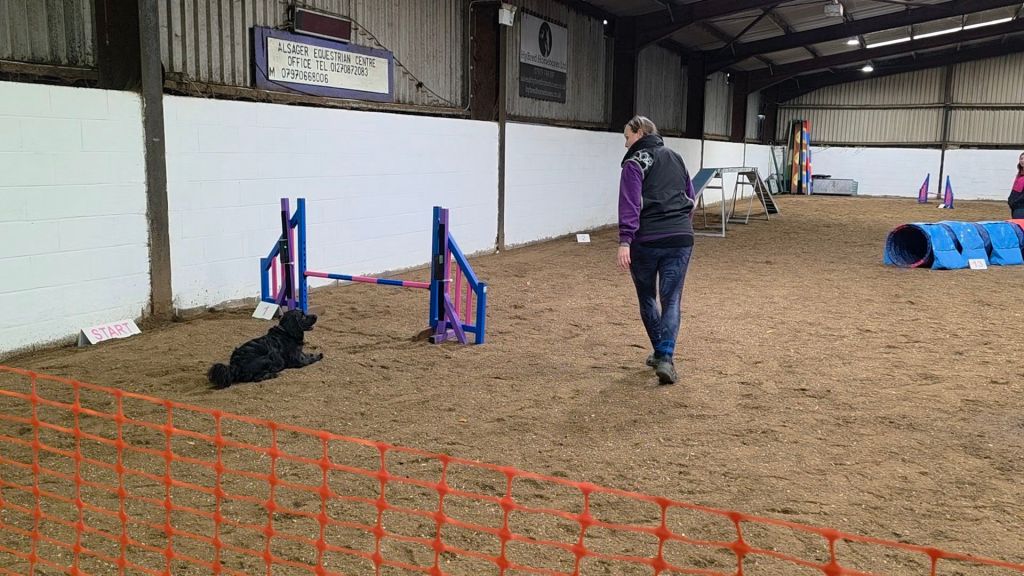
Yesterday, Quest and I went to an agility show.
It was at a venue that used to make him quite nervous. The last time we were there, he didn’t run like he did yesterday!
Since we’ve been training and competing on AstroTurf for the past few months, I wasn’t sure how he’d feel going back to a sand and fibre surface. I half expected his confidence to dip, but it didn’t.
His first run went really well — he just ran past one jump, but his focus and play were fantastic. His second run was similar — he broke his start line a couple of times, but once reset, he ran a lovely agility round which would have been clear if he hadn’t already been E’d for his startline blip. Then, to top it off, he won his third run. We were both feeling really good.
The Internal Battle
Then came a long wait for the fourth run. The day started to drag. I could feel my social battery slipping, my body getting even colder inside the freezing venue, and that slow, creeping tiredness that makes concentration harder.
And this is where the neurodivergent part of my brain kicked into overdrive. One side of me wanted to stay and give it another go. I could hear the familiar voice saying, “You’ve come this far; you might as well.”
But the other part of my brain was starting to shut down. I could feel the sensory overload creeping in — the constant background chatter, the clatter of equipment, and that strange hum of multiple conversations happening at once. It’s like trying to listen to one radio station while five others play in your head.
That’s the part people often don’t see. It’s not just tiredness; it’s neurological saturation. Every sight, sound, and movement feels amplified. Trying to stay focused becomes like wading through treacle.
Listening to My Brain and My Dog
Sitting there, I had to make a choice. Did I stay for one more run because that’s what everyone else was doing, or did I listen to what I knew I needed?
I thought about Quest. He’d had three really good runs. His confidence was high. If I stayed and ran again while my brain was frazzled and my mood was dipping, he would definitely pick up on that energy.
That’s the thing with sensitive dogs — they feel what we feel. Our emotions leak into our handling, our tone, and our timing. I didn’t want to undo months of building confidence just because I felt pressured to stay.
So I took a deep breath, and I made the choice to leave.
The Hidden Side of Dog Shows
It might sound like a simple decision, but for a neurodivergent handler, it’s rarely that straightforward.
For many of us, agility shows are more than just a physical challenge — they’re a full sensory, emotional, and social marathon.
The parts that look effortless for some can quietly drain a neurodivergent handler’s energy long before they even step into the ring.
Here are just a few of the things that can make a day at a show more demanding than it appears:
- Constant sensory input — the echo of barking, people chatting, dogs tugging, equipment banging, and unpredictable background noise that our brains can’t always filter out.
- Social navigation — small talk at the ringside, chatting with other competitors or ring party, feeling pressure to “be sociable,” or managing friendships within competitive environments.
- Executive function overload — remembering course maps, running orders, call times, ring numbers, reward placement, and your own mental prep while keeping your dog calm and ready.
- Transitions and waiting — long periods of downtime that make it hard to stay regulated, especially when routines shift or runs get delayed.
- Emotional masking — trying to look “fine” while your brain is running on fumes or battling overstimulation, because it doesn’t always feel safe to show otherwise.
- Body-brain disconnect — the physical fatigue or proprioceptive overload that builds up from noise, light, motion, and sensory unpredictability across the day.
For someone neurotypical, these might just be background factors — tiring, maybe, but manageable. For a neurodivergent person, though, they’re often magnified and cumulative.
They’re not signs of being incapable or overdramatic; they’re signs that our brains process and prioritise information differently.
Add to that the sheer energy and planning it takes just to get out of the house and travel to the event — organising kit, timing, dogs, snacks, travel, and routes — and it’s easy to see why a show day can be so draining even before the first jump.
And that’s exactly why some of the choices we make like stepping back, leaving early, or needing more quiet time aren’t about being lazy or uncommitted. They’re about staying kind to both ourselves and our dogs.
There’s this invisible rulebook at agility shows — the idea that you stay until the end, that you don’t “waste” a run, that you make the most of every opportunity.
When you’re neurodivergent, though, you often feel like you’re constantly breaking unspoken rules just by doing what you need to do.
Everyone else seemed fine waiting around but my brain was screaming for quiet. I could feel that old voice in my head telling me I was “doing it wrong,” like I should just stay and do it because that is what others were doing.
But I’ve learned that masking those feelings — forcing myself to “fit in” — only leads to burnout later. It’s taken a long time to realise that doing what’s right for me isn’t selfish. It’s necessary.
Why Leaving Early Was the Right Choice
As I packed up, I reminded myself that this wasn’t quitting. It was protecting progress for both of us. Quest had ended the day feeling confident, happy, and connected with me — that’s what mattered most.
I also knew that the drive home in daylight would help me decompress. Watching the scenery change, having time to process the day, and knowing it wasn’t going to be a mad rush getting home late and having to fit all the family things in!
Old me might have pushed through and regretted it later. New me recognised that leaving on a high note would serve us both far better in the long run.
Don’t get me wrong, it wasn’t as easy as this may read! I had many internal conversations, many back and forth thoughts and conversations with my husband who was with me.
What This Experience Taught Me
This day reminded me that neurodivergent decision-making in dog agility isn’t about being indecisive or dramatic — it’s about balancing competing needs.
It’s a constant act of checking in with yourself and your dog, weighing up sensory load, emotional energy, and long-term confidence.
Our brains work differently, and that’s okay. What looks like “giving up” to someone else might actually be an act of self-awareness and care.
Quest didn’t need one more run. He needed me regulated, calm, and confident. And I needed to know that I’d chosen what truly mattered.
Final Thoughts
If you’ve ever felt torn at a show — between what you think you should do and what you actually need — you’re not alone.
Listening to yourself and your dog takes practice, especially in a world that values constant doing and progress over mindful pausing and stepping back.
Next time you’re in that situation, try asking: “Will this decision build our confidence, or drain it?”
Sometimes the bravest, most successful choice you can make is simply to stop while things are good.
If this resonated with you, I’d love to hear your thoughts. You can find more reflections like this in both of my free Facebook Support groups – Neuro-Inclusive Dog Hub and Dog Agility Unmasked, where we explore what it really means to thrive as a neurodivergent handler in the agility world.



 Dogs And Divergent Minds
Leave a comment