
Every single year, I have set goals.
Personal goals.
Business goals.
Goals for my agility dogs.
Goals have always felt like the responsible thing to do. The thing that everyone does at the start of the year. The thing you are supposed to do if you want to move forward, improve, succeed.
But 2026 is different for me.
This year, I’m not setting goals. And that decision hasn’t come from a lack of ambition or motivation. It has come from listening. From reflection. From finally realising that sometimes the most powerful thing you can do is stop pushing and start aligning.
I’ve Always Set Goals, Until They Stopped Serving Me
Goal setting has been a constant throughout my life, especially when it comes to my agility dogs!
It gave me structure, direction, and something solid to focus on. As a neurodivergent person, goals helped anchor my brain. They made progress feel measurable and reassuring.
But over time, those goals slowly stopped feeling supportive and started feeling heavy.
What once felt motivating began to feel like pressure. Deadlines became expectations. Expectations became self-worth. And by 2025, the cost of constantly pushing became impossible to ignore.
Last year taught me something important. Goals are not always the problem, but blindly clinging to them can be!
For a long time, I thought the answer was to try harder. Looking back, what I really needed was to slow down enough to notice what wasn’t working and what my goals were actually about!
You Don’t Need a New Year, New You
There is so much messaging around January that tells us we need to reset, reinvent, overhaul.
New year, new you.
But the truth is, nothing is wrong with me. And there isn’t anything ‘wrong’ with you either!
I don’t need a new version of myself! And neither do you!
I need to reconnect with the version that has been there all along. The one who loved learning. The one who loved understanding behaviour. The one who finds joy in curiosity rather than outcomes.
The one who puts me first instead of just doing what everyone else expects me to do!
Teaching agility the way others taught it, or the way clients expected it, just didn’t align with me.
I wasn’t doing anything wrong, running skills and drills, expecting dogs to just do the course. But for me the real focus has always been on the handler–dog relationship.
The handler’s mindset, their nerves, their anxiety, alongside the dog’s emotional state and well-being. This has always been at the forefront of everything I teach.
Results have always been a byproduct of those relationships. But in a sport so rooted in progression and moving forward, clients often expect the opposite.
It genuinely upsets me when I see dogs at shows who aren’t enjoying it as much as their handlers think they are, when it’s more about the ego of the handler than the well-being of the dog.
It led me to one thing that hit VERY hard – burnout!
Burnout was not a failure. It was information. And it was pointing me back towards alignment rather than reinvention.
Late Diagnosis, Perimenopause, and Listening to My Body
Being late diagnosed autistic and ADHD explains a lot of my patterns.
The hyperfocus.
The need to understand the what and the why.
The tendency to go all in.
Now add perimenopause into the mix, and suddenly my body stopped allowing me to power through. The strategies I had relied on for years simply stopped working.
Burnout started hitting faster and harder. Recovery took longer. And my body was very clear that something had to change.
For the first time, I had no choice but to listen. I realised that as an agility trainer I had been masking for years!
There was grief in that realisation, but also relief.
Once I stopped fighting my body, things became clearer very quickly.
How Agility Drifted Away From What It Was Meant to Be
Agility was never meant to be my whole identity.
It all started as a hobby for me, with Milo, 11 years ago.
A hobby to help with my own anxiety, something to get me out of the house, something I could connect with him through. Back then, in training, I wasn’t getting the information I needed delivered in a way my brain could understand.
Now, I know I’m neurodivergent, but then I didn’t. So I started learning everything myself. I’d come home from classes feeling like a failure, feeling like my dog was the worst one there, and I didn’t know how to fix it. The classes simply weren’t set up for neurodivergent people like me.
I hyper-focused on dog behaviour, on learning agility, on doing all of those things, but it was for my own benefit.
Then, I was offered the opportunity to start teaching. That wasn’t my intention, and I was very naive. I got a lot of opinionated people, rightly or wrongly, saying things like I shouldn’t be a trainer, that my dogs weren’t proper Spaniels, that I didn’t know enough, or that I shouldn’t be teaching at all.
I now realise because of being neurodivergent, the RSD, and imposter syndrome, I ploughed thousands of pounds, hours, and energy into more qualifications, training my dogs up the grades, because I believed that would make me accepted.
I found myself running a business while everyone told me I shouldn’t. My curiosity and drive to learn, combined with wanting acceptance, led me straight into this trap.
I thought if I did another course, or won another class or rosette, people would like me and I would finally feel accepted.
It didn’t work that way.
Once I started becoming successful, people stopped talking to me!
Dog agility is a competitive, opinionated world. And without realising it, I got caught up in that culture.
The grades.
The wins.
The expectations.
Slowly, agility became less about enjoyment and more about performance. Less about alignment and more about proving myself.
This isn’t a criticism of agility itself. I actually love agility (when done correctly) for what it can do for a human and dog relationship, I just don’t always like it’s culture.
This is purely my honest reflection of what can happen when neurodivergent people stay in high-pressure environments without enough support.
Tall Poppy Syndrome, RSD, and Chasing Acceptance
When you start doing well in competitive spaces, something interesting often happens.
At first, people cheer you on. They celebrate your success. They encourage you.
But repeated success can change that tone.
A really clear example of this is Luke Littler in the darts world. When he first burst onto the scene and won, everyone was behind him. He was supported, celebrated, egged on.
Fast forward to repeated success, and the tone shifted. Watching the darts on the television recently, the booing was loud. The support had turned into discomfort.
Success makes people uneasy.
That is tall poppy syndrome.
In agility, similar dynamics exist. I have experienced it repeatedly.
And with RSD in the mix, those comments, looks, and undercurrents hit hard.
Back then I pushed more. Tried harder. Thought maybe if I got to Grade 7, maybe if I won more, maybe if I followed the same paths as others, I would finally feel accepted.
But what I was really doing was moving further away from myself.
Being Good at Something Doesn’t Mean It Aligns With You
This was one of the hardest truths to face.
I am very good at agility behaviour.
My dogs get results.
My clients get results.
Externally, everything looked successful.
But internally, it wasn’t aligned.
I was masking.
Training in ways that didn’t always sit comfortably with my values.
Some clients got it, they got what I was doing for them and their dogs, they stuck with my ‘slower’ more aligned ways. Others didn’t, they left and went on to train with trainers who would focus on equipment with little regard for the emotional wellbeing of the dogs.
My clients were getting results, but trying to badger people for reviews was really difficult. I don’t like confrontation, and while people were thanking me in secret, via DMs, emails, and messages, getting them to publicly share that I had helped them was a challenge.
From a business perspective, that was tricky. From a neurodivergent perspective, it hammered home my rejection sensitivity and fed self-doubt, making me question whether I was good enough.
Sometimes I wonder if it wasn’t just me, but that people didn’t want to admit they needed help publicly.
It was extremely difficult, balancing the emotions, the business side of things, but also providing a service that people wanted.
So I started to more and more show up as the version of myself I thought was expected, I was the agility trainer people expected rather than the one that felt authentic. I was running a business after all and clients equal money.
BUT, I started to find ways around teaching so I could help out the dogs I was training.
Things like putting out easier courses as the environment was hard for them, or not doing the contact equipment if the dog wasn’t ready. But it still wasn’t sitting right with me. I knew my clients were expecting more ‘proper agility’ and it would always make me feel like I had failed.
If I gave the handler what they wanted, I would be failing the dog, if I did it with the dog in mind, I would face awkward conversations and clients pushing for more despite me explaining things time and time again.
It was draining.
Success without alignment will eventually lead to burnout and it did! My body and brain finally said no!
Why I’m Choosing a Roadmap Instead of Goals
This year is not about proving anything, trying to fit in, or be accepted.
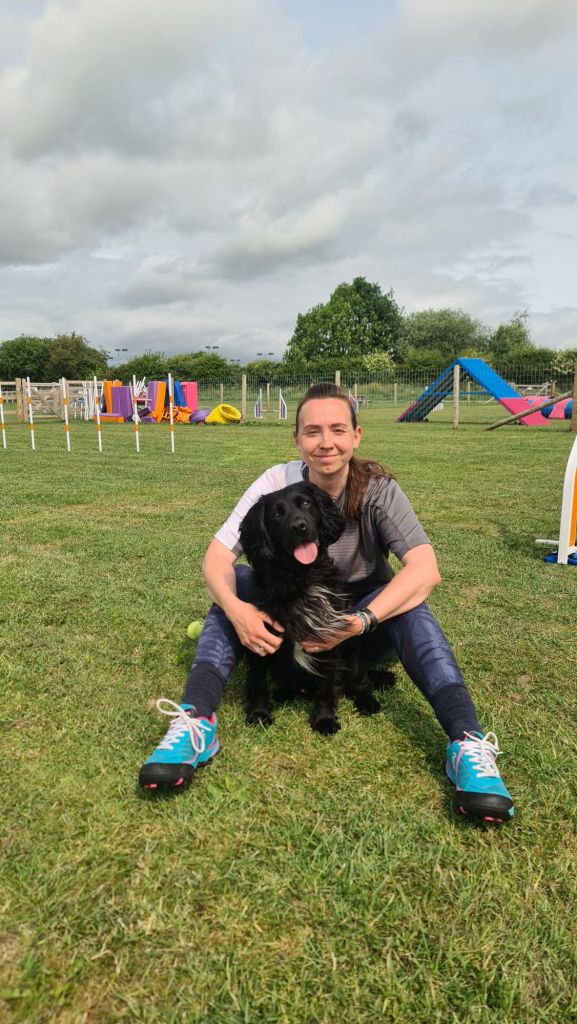
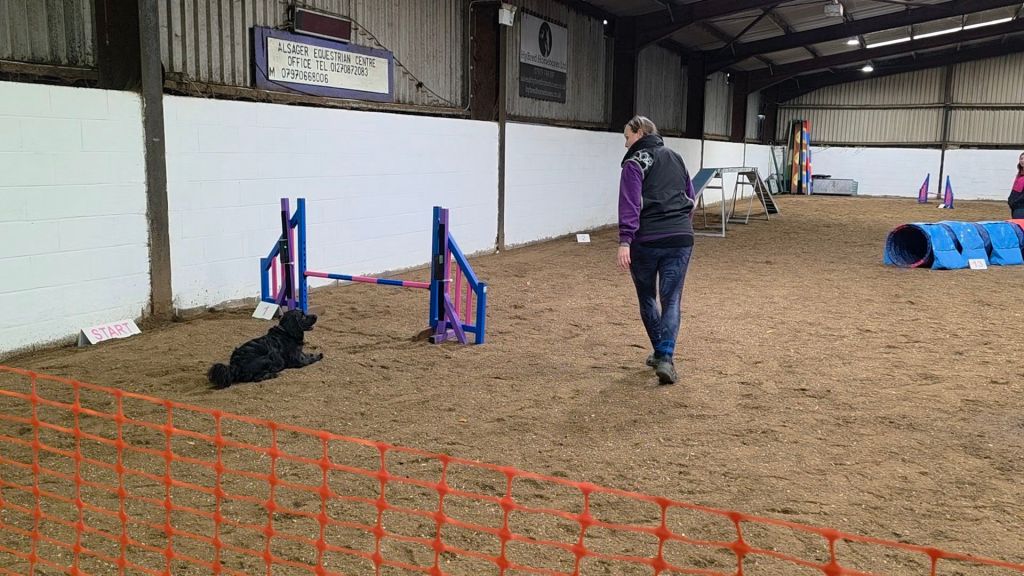
It is about me remembering who I am, who I help, and why I train agility with Quest.
My business direction has changed for the better, I can help way more dogs and their humans with the work I do now!
I still believe in structure.
My business has a roadmap. I know where I am heading and why. All of my experiences have led me to the work I do as The Neurodivergent Dog Coach.
But a roadmap rather than goals allows flexibility.
Goals can feel rigid. All-or-nothing. Pass or fail.
A roadmap allows pauses, detours, slower seasons, and recalibration.
For neurodivergent people, whose motivation and energy are not linear, that flexibility is essential.
This is about moving forward without pressure.
Having direction without pressure has been far more regulating for my nervous system than chasing outcomes ever was.

What This Looks Like for Me and Quest in 2026
When it comes to agility, 2026 is about calm.
I’m not rushing grades.
I’m not forcing timelines.
I’m not chasing outcomes for the sake of them or to feel accepted by others!
There are things I would like to work towards, but they are guideposts, not demands. Progress will happen at a pace that supports both of us.
Agility is becoming fun again, not a performance metric.
A Gentle Invitation for Other Neurodivergent Handlers
If you are a neurodivergent dog handler or dog professional, and you feel tired, overwhelmed, or disconnected, this is your permission slip.
You are allowed to rest without quitting.
You are allowed to change direction without explanation.
You are allowed to take side roads.
Alignment creates longevity. Pressure creates burnout, take it from someone who knows!
I’m not setting goals this year because I don’t need to prove anything anymore.
2026 is about listening, aligning, and creating space for the version of me that was always there.
A roadmap, not a race.
If you are a neurodivergent dog handler, agility handler, or dog professional, or you want to understand agility and dog training through a neurodivergent lens, you are very welcome to join my free Facebook communities:
You’ll find honest conversations, shared experiences, and support without pressure.
Sometimes the bravest thing you can do is stop setting goals and start listening to yourself!
Till next time
Katrina x


 Dogs And Divergent Minds
Leave a comment