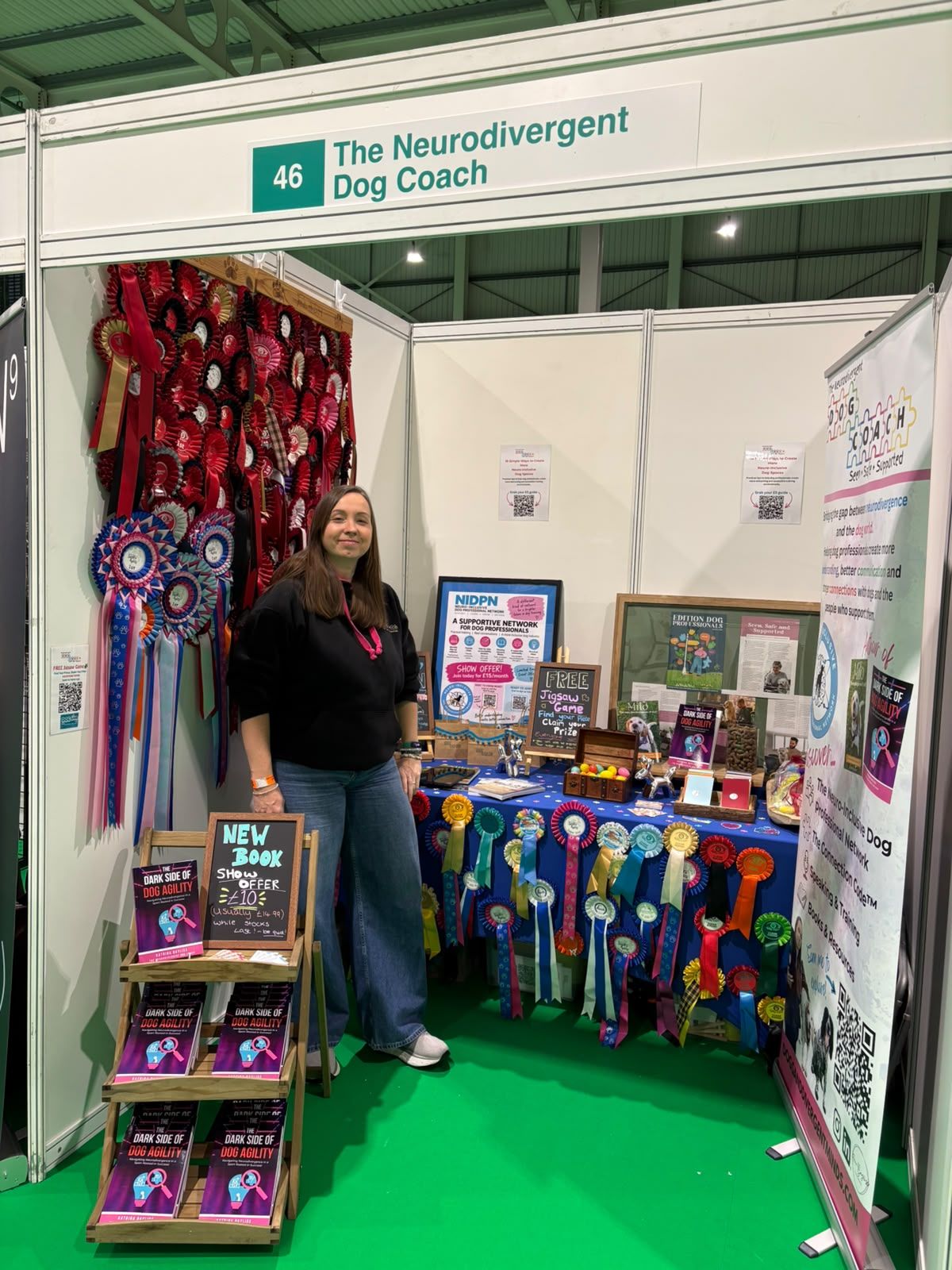
Understanding the invisible load of busy events, why enjoying an experience doesn’t mean it costs us nothing, and how we can make the dog world more neuro-inclusive.
Have you ever come home from an event you’ve been looking forward to for weeks, had a brilliant time, and then found yourself completely exhausted afterwards?
You might feel flat, struggle to concentrate, have very little motivation to do anything, or just feel like you need to hide away from the world for a little while.
And you might wonder why, because you enjoyed yourself. You wanted to be there. You had a good time.
So why do you feel like you’ve run a marathon when all you’ve done is spend a day doing something you love?
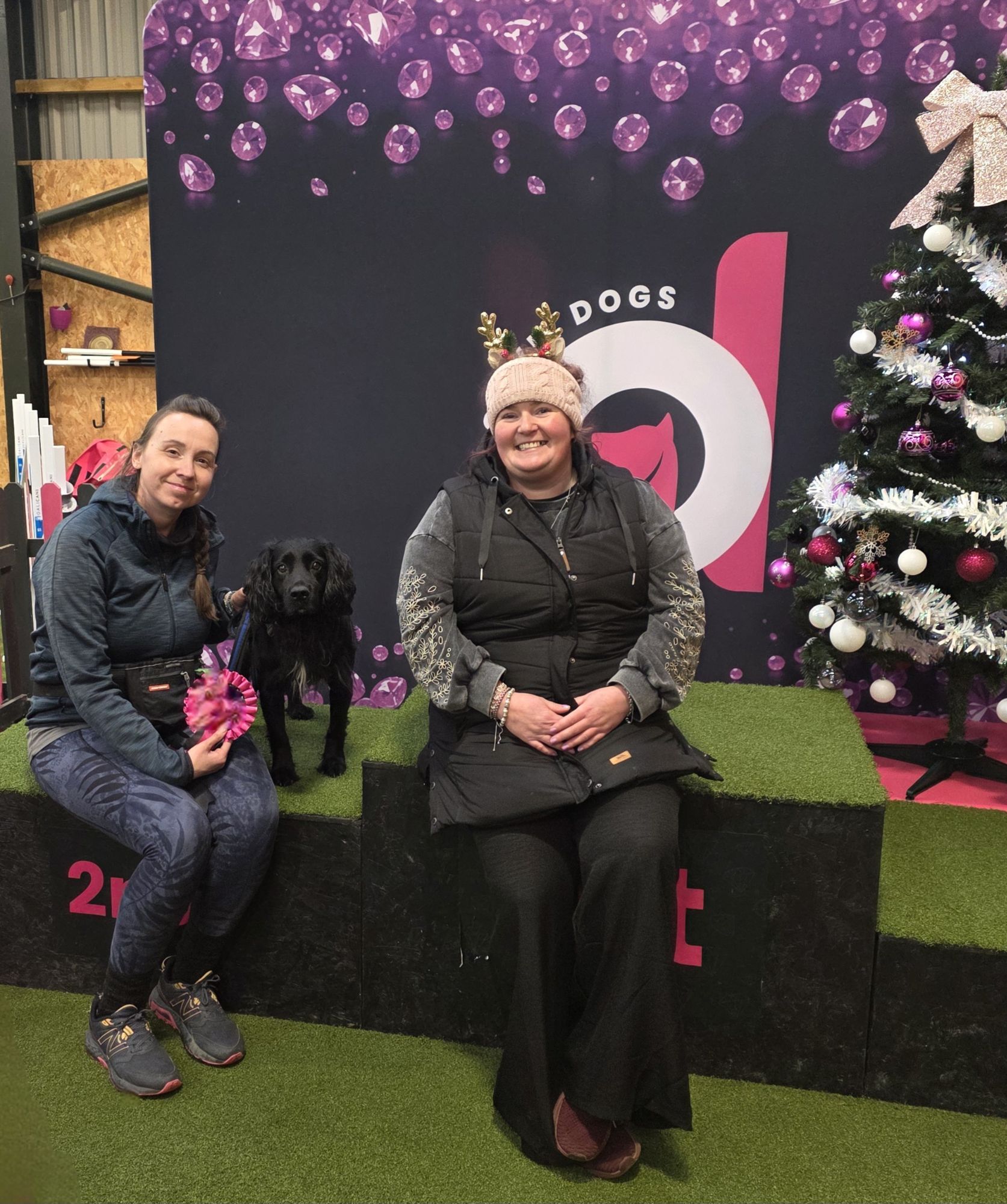
I’ve been thinking about this quite a bit since attending Edition Dog recently, and it’s got me thinking about something bigger than my own recovery time.
What if we started looking at dog events a little differently, by considering the experience of the people attending them, as well as the dogs?
The invisible load of attending a dog event
I absolutely loved being at Edition Dog.
I got to meet people, catch up with friends, talk about my work and spend time surrounded by dogs. What’s not to love?
But I also know from experience that the days following a big event can be surprisingly difficult.
And it’s not just the physical tiredness.
Think about everything involved in attending a dog show, an exhibition or a professional event.
There’s the journey, the unfamiliar environment, the noise, the crowds, the conversations, the decisions about where to go and what to do. There might be loudspeakers, music, bright lights, dogs barking, people moving around and lots of different things competing for your attention.
If you’re exhibiting, there’s the added pressure of talking to people, explaining what you do, remembering information, networking and trying to make the most of the opportunity.
If you’re competing, you’re also thinking about your dog, your course, your performance and everything happening around you.
And if you’re neurodivergent, some of those things might require considerably more energy than other people realise.
For someone who is neurodivergent the sheer amount of activity and stimulation can be difficult to filter out. Sensory input, unexpected changes, social interaction or navigating an unfamiliar environment might require a lot of processing.
Of course, neurodivergent people aren’t all the same. What one person finds overwhelming, another might enjoy. And plenty of neurotypical people find busy environments exhausting, too.
The point isn’t that everyone will struggle.
It’s that we can’t assume someone is coping simply because they look as though they’re managing.
Someone might be smiling, chatting, working, competing and appearing perfectly comfortable, while using an enormous amount of energy to do all of those things.
That’s the invisible load.

You can love something and still find it exhausting
This is something I’ve experienced throughout my time in dog agility and in business.
I’ve had brilliant days at competitions and business events, and have come away feeling on top of the world.
But I’ve also experienced that huge dip afterwards.
You’d think that finally achieving something you’d worked so hard for would leave you feeling amazing. And sometimes it does.
But when you’ve spent weeks or months building towards something, the anticipation, preparation and intensity can take up a lot of your capacity.
Then the event finishes.
The excitement disappears, the structure you’ve been working towards is suddenly gone, and you have space to notice just how much energy you’ve used.
I’ve started thinking about it a bit like a snow globe.
Everything gets shaken up. There’s excitement, activity and lots of different things swirling around, and you can’t quite see everything clearly.
Then the shaking stops.
But the contents don’t settle immediately. They need time.
And I think we sometimes forget that we need that time, too.
We expect ourselves to get home from a competition, exhibition or conference and simply carry on as normal. We might even feel guilty if we’re not immediately ready to get back to work.
But enjoying an experience doesn’t mean it costs us nothing.
You can have the best time and still need to recover afterwards.
You can be grateful for an opportunity and still feel exhausted by it.
And you can love the dog world while recognising that some of the environments within it can be demanding.
None of those things contradict each other.

What does this mean for Neuro-Inclusion at events?
When we talk about making the dog world more neuro-inclusive, I think we need to look beyond just the training.
Think about events like Crufts or other large dog shows and exhibitions. Places where people go to watch displays, browse shopping stands, discover new products, meet people and spend time immersed in the dog world.
Then there are professional events, conferences and CPD days, where dog professionals come together to learn from speakers, develop their knowledge, network and invest in their businesses.
These events offer so much. But they can also be incredibly demanding environments.
There might be crowds, background noise, loudspeakers, bright lights, constant movement, lots of conversations and an enormous amount of information to take in. For people attending professional events, there might also be hours of listening, learning and social interaction.
For some people, processing all of this can take considerable energy.
That’s where I think event organisers have an opportunity to make a real difference.
Neuro-inclusive event design doesn’t mean removing all stimulation or making every environment the same. It means recognising that people have different needs and considering how we can give them more choice in how they experience an event.
Clear information before an event can help people prepare for what to expect. But we also need to think about what happens once they arrive.
Having access to a calmer space, where people can take a break from the sensory demands around them, could help them pause, process and return when they’re ready.
Because attending an event shouldn’t have to mean pushing through until you’ve reached your limit.
We talk a lot about creating brilliant experiences for visitors, bringing people together and helping attendees get the most out of an event.
Perhaps we also need to think about what helps people feel comfortable enough to stay, participate and enjoy everything the event has to offer rather than having to leave early as it all just becomes too much.
Why I’ve developed The Reset Space
My experience and the conversations I had over the last few months has also reinforced something I’ve been thinking about doing for a while.
I want to do more to help make dog-related events and professional spaces more accessible.
That’s part of the thinking behind The Reset Space by The Neurodivergent Dog Coach.
The idea is to create calmer, sensory-considerate spaces at events where people can step away from the demands of their surroundings, take a break and return when they’re ready.
It’s about creating an opportunity to pause, recharge and reconnect.
I see potential for The Reset Space in two areas:
Supporting people and dogs at dog events
Dog shows, professional events, pet exhibitions and dog-friendly festivals can be busy environments for both ends of the lead.
For people, there might be noise, crowds, conversations and a huge amount of sensory information to process.
For dogs, there might be unfamiliar surroundings, close proximity to other dogs, movement, noise and lots of competing stimuli. Every dog will experience these environments differently, and what one dog copes with comfortably might be difficult for another.
We already spend time thinking about how to support dogs in these situations. I want us to consider how we can support the people attending them, too.
A space designed around the needs of people and dogs could offer an opportunity to step away from the busiest parts of an event.
Why this matters for dog shows and exhibitions.
I think there’s an important opportunity for dog shows, exhibitions and other events where people spend hours browsing, shopping, watching demonstrations and meeting other people.
Busy environments can be demanding for both people and dogs. Some attendees might plan to stay for the whole day but find that the noise, crowds, sensory input or their dog’s needs mean they have to leave earlier than they’d intended.
Others might decide not to attend for very long in the first place because they already know how difficult these environments can be for them or their dog.
What if there was another option?
A place where people could step away from the busiest parts of the event, give themselves or their dog some breathing space, and return when they felt ready?
For an event organiser, that could have benefits beyond simply making the experience more comfortable.
If someone can take a break rather than having to leave, they have more opportunity to enjoy the rest of the event. They might return to the exhibition stands, spend more time browsing, have conversations they would otherwise have missed and discover businesses they hadn’t yet had the chance to visit.
For the retailers and exhibitors who have invested in attending, helping visitors feel able to stay and engage could create more opportunities for meaningful conversations and sales.
And I think there’s a wider benefit, too.
When people feel that an event has considered their needs, that can shape how they remember the experience. They may be more likely to recommend it to others, return in the future or feel confident attending another event.
For me, this is about creating a better experience for everyone involved: attendees, dogs, event organisers and the businesses exhibiting.
Because making an event more accessible isn’t separate from creating a successful event. The two can support each other.

Supporting people at professional events
The second application is for people-only environments, such as conferences, seminars, networking events and professional development days.
These events can be incredibly valuable, but they can also demand a lot from us.
There might be hours of listening, networking, social interaction and processing information, often with very little opportunity to pause.
For neurodivergent professionals, particularly those who experience sensory sensitivities or find sustained social interaction demanding, having somewhere to step away could make a difference to how accessible that experience feels.
And this isn’t just about neurodivergence.
Anyone can benefit from having the option to take a break from a busy environment.
The Reset Space is here to help event organisers consider these needs and create more welcoming experiences for their attendees.
Because I don’t think inclusion should begin and end with whether someone can physically enter a venue. We also need to consider what happens once they’re inside.
Helping people get more from professional events
There’s another side to this that I think is really important, particularly for anyone organising conferences, seminars or professional development events.
When you’re bringing people together to learn, listen to speakers, network and share ideas, you’re asking them to process a lot of information over a relatively short period of time.
And people only have so much capacity.
Even when someone is genuinely interested in the subject, they can reach a point where they’re struggling to take anything else in. The next speaker might be brilliant, but if their brain is already overloaded, how much of that information are they actually able to absorb?
Imagine being able to step away for 15 minutes, half an hour or however long you need, into a space where you can reduce the sensory demands around you, gather your thoughts and give yourself time to reset.
That’s very different from simply grabbing a coffee between sessions.
Food, drink and a break are important, of course. But having somewhere specifically designed to offer a calmer environment can provide a different kind of support, particularly for people who are feeling overwhelmed by noise, activity, social interaction or the sheer amount of information they’re processing.
It gives people the opportunity to pause without necessarily having to leave the event altogether.
And from an organiser’s perspective, that matters.
It could be the difference between someone reaching their limit at lunchtime and deciding they need to go home, and someone being able to take a break, return when they’re ready and continue enjoying the day.
It could mean they leave feeling that the event was valuable, that they learnt something useful and that they’d happily come back next year, rather than remembering it as an experience that was simply too much for them.
For me, that’s an important part of accessibility. It’s not just about getting people through the door. It’s about considering what helps them participate, benefit from the experience and want to return.
We need to look beyond the behaviour
There’s a connection here with the work I do as The Neurodivergent Dog Coach.
When we look at a dog displaying a particular behaviour, we need to consider the wider picture. What’s happening in their environment? What might they be feeling? What are their needs? What has led to this moment?
We can’t understand the behaviour simply by looking at what’s happening on the surface.
I believe we need to bring that same curiosity to the people in the environment, too.
Someone who appears distracted, withdrawn, restless or disengaged might not be uninterested. They might be processing a lot of information, feeling overwhelmed or struggling to manage the demands around them.
If we want to create better experiences for dogs and their people, we need to look beyond what we can immediately see.
We need to consider the individual, the environment, their emotions and their needs.
That’s how we begin to understand what might actually help.
What could we do differently?
If you’re an event organiser, a dog trainer, an instructor or someone who creates learning environments for dog professionals, I’d encourage you to think about the experience of the people attending your events.
Not just whether they can get through the door, but whether the environment gives them different ways to participate.
Could you provide clearer information before the event?
Could attendees find out what to expect, where to go and where they can take a break?
Is there somewhere they can step away from the busiest areas without having to leave altogether?
And are you considering the needs of the person holding the lead, as well as the dog?
You don’t need to have all the answers immediately.
Sometimes, the first step is simply asking different questions.
For me, that’s what Neuro-Inclusion is about. Looking beyond what we’ve always done, being curious about the different ways people experience the world, and considering what we can change to make participation more accessible.
The dog world has so much to offer. The connections, the learning, the shared experiences and the opportunities to spend time doing something we love are all valuable.
I’d love to see more people able to access those experiences without feeling that they have to push themselves beyond their capacity to do so.
And that’s one of the reasons I’ve created The Reset Space.
Because everyone deserves the opportunity to pause when they need to, rather than having to wait until they reach the point where they can do no more.
Sometimes, we just need a little time for the snow globe to settle.
And perhaps we can start creating environments that recognise that.
Till next time, Katrina x
Frequently asked questions
Why can dog events be overwhelming for neurodivergent people?
Dog events can involve noise, crowds, unfamiliar surroundings, sensory stimulation, social interaction and changes to routine. For some neurodivergent people, processing these demands can use considerable energy. Experiences vary, so it is important not to assume that all neurodivergent attendees will have the same needs.
How can dog shows and exhibitions become more neuro-inclusive?
Event organisers can consider providing clear pre-event information, accessible venue details, predictable schedules, quieter areas and opportunities for attendees to take breaks. Asking attendees about their access needs and offering different ways to participate can also help create a more inclusive experience.
What is a sensory reset space?
A sensory reset space is an area designed to offer a break from the demands of a busy environment. Depending on the setting, it might include quieter surroundings, comfortable seating and fewer sensory distractions. It gives people an option to pause and return to the event when they feel ready. The right setup will depend on the venue and the people using it.
What is The Reset Space by The Neurodivergent Dog Coach?
The Reset Space is an initiative by Katrina Bayliss, The Neurodivergent Dog Coach, to help create more neuro-inclusive event environments. It is intended to support people at professional events and to explore opportunities to support both people and dogs at dog shows, exhibitions and other dog-related events.
Do only neurodivergent people benefit from sensory-friendly spaces?
No. Although sensory-friendly spaces can be particularly valuable for some neurodivergent people, anyone can benefit from an opportunity to take a break from a busy environment. People have different sensory preferences, energy levels and access needs, and offering more choice can make events more welcoming to a wider range of attendees.
Why is Neuro-Inclusion important in the dog industry?
Neuro-Inclusion recognises that dog professionals, handlers and clients have different ways of processing information, communicating, learning and experiencing their environments. Considering these differences can help create more accessible training, better communication and more sustainable experiences for both people and dogs.


Leave a Reply